Craft · 6 min read
How a sherwani is cut
Eleven panels, a collar that is built rather than folded, and the one measurement no alteration can rescue.
18 August 2026
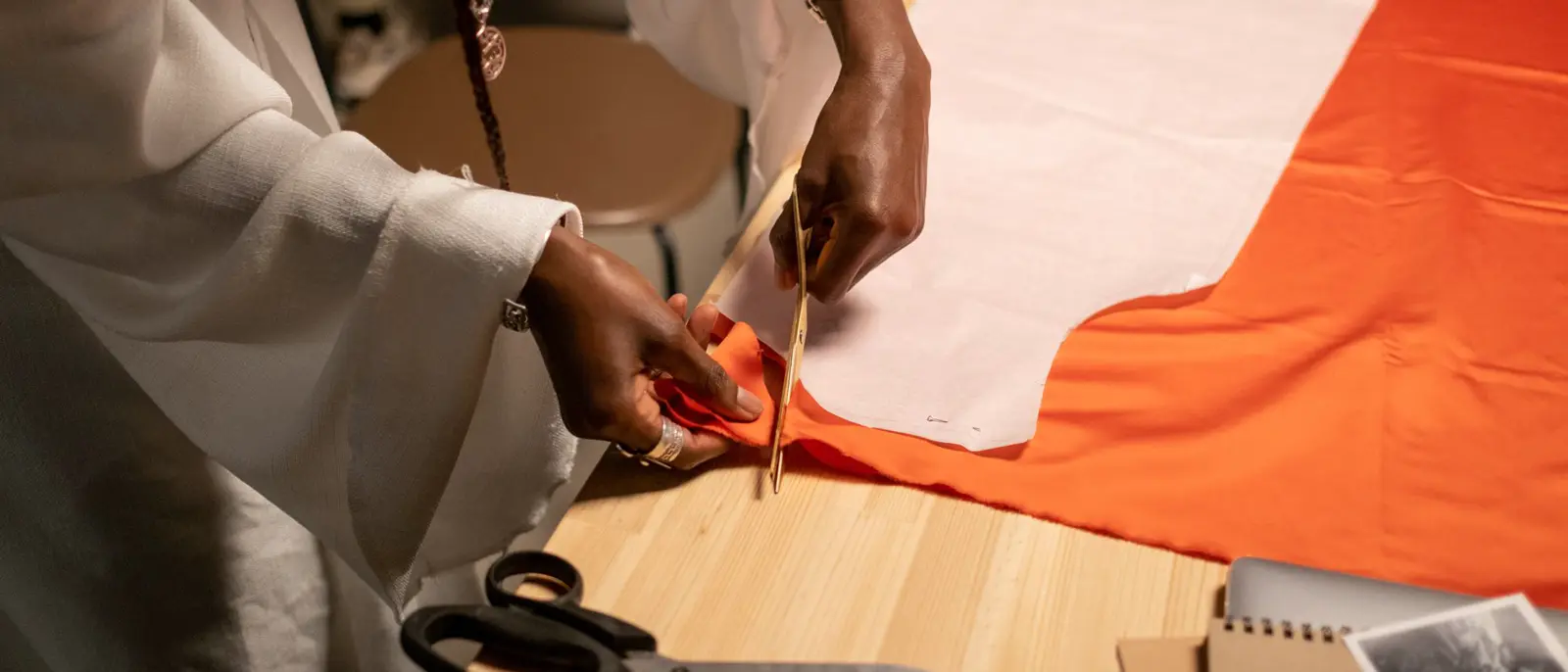
A sherwani looks like a long coat and is cut like a piece of structural engineering. There are eleven panels in the version we make most often — two fronts, two backs, two side panels, two sleeves in two parts each, and the collar. The panels exist because a single piece of cloth cannot be persuaded to follow a chest, a waist and a seat that are three different widths without either gathering or straining.
The draft comes before the cloth
Nothing is cut until your measurements are drawn onto paper at full size. This is the stage where a mistake is cheap. A cutter looking at a draft can see that a chest of forty and a shoulder of twenty-one do not belong to the same body, and will ask before laying a knife on silk rather than after.
It is also where we build in the half inch. Every side seam carries half an inch of spare cloth folded inside it — not for us, but for whatever tailor you take it to two years from now when your chest has changed by an inch and you would rather alter than replace.
The shoulder is the measurement that matters
A waist can be taken in. A length can be shortened. A sleeve can be re-set. A shoulder that is an inch too wide will collapse a quarter of an inch down your arm and stay there, and no alteration fixes it, because the armhole and the sleeve head were drafted to that width. This is why we ask for someone else to hold the tape: measuring your own shoulder seam-to-seam across your own back is not possible to do accurately, and confidence about it is worse than an admission that you guessed.
The collar is built
The stand collar on a sherwani or a bandhgala is not a fold. It is three layers — outer cloth, a canvas interlining cut on the bias, and a lining — pad-stitched together so the whole thing holds a curve on its own. Skip the canvas and you get a collar that stands beautifully in the shop and lies down on your neck by the time the pheras start.
Then it waits
Cut panels go to the embroidery frame flat, because you cannot work zardozi on a curve. They are stretched on an adda, worked, and only then joined. It means the piece exists as separate embroidered panels for most of the weeks you are waiting, which is why we cannot send you a photograph of the finished thing halfway through.
If a sherwani sits away from your neck, it is almost never the size. It is the collar.